
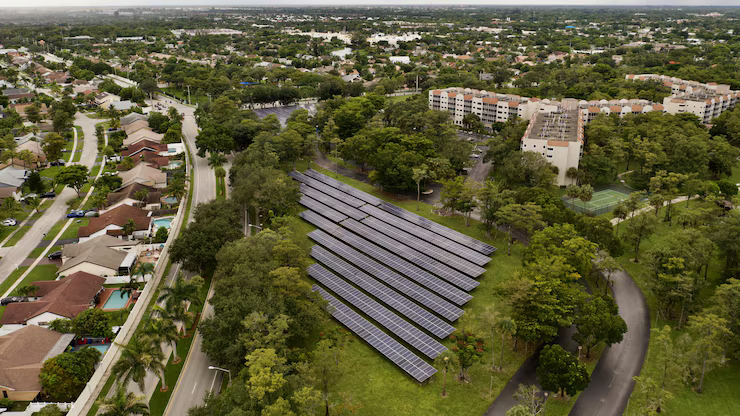
The Quick Answer: How Many Solar Panels Do I Need?
How many solar panels do I need? For most Geelong households, the answer is between 6 and 20 panels — typically delivering a system size of 6.6kW to 10kW. Your exact number depends on your daily energy consumption, roof space, panel wattage, and how much of your bill you want to offset. Read on to get the full picture.
Why Geelong Homes Have Unique Solar Needs
Geelong’s climate sits in a sweet spot for solar. You enjoy a solid average of 4.5 peak sun hours per day, though this drops noticeably during winter months when cloud cover rolls in off Port Phillip Bay. That seasonal variation matters when sizing your system.
Local homes also tend to run higher energy loads than you might expect. Ducted heating, reverse-cycle air conditioning, and electric hot water systems are common across suburbs from Newtown to Lara — and all of that consumption needs to be factored into your panel count. If you’re in a newer estate on the city’s fringe, your usage profile may look very different from an older brick home closer to the CBD.
Step-by-Step: Working Out How Many Solar Panels You Need
Getting the right number of panels isn’t guesswork — it’s a straightforward calculation once you have the right inputs. Here’s how to work through it:
- Find your daily energy usage: Check your electricity bill for your quarterly or monthly consumption in kilowatt-hours (kWh), then divide to get a daily average. Most Geelong households use between 15kWh and 30kWh per day.
- Divide by peak sun hours: Geelong averages roughly 4.5 peak sun hours. So a household using 20kWh per day needs a system producing around 4.4kW at minimum.
- Factor in system losses: Real-world efficiency losses from inverter conversion, heat, and shading typically reduce output by 15–25%. Divide your target output by 0.80 to account for this.
- Choose your panel wattage: Modern residential panels commonly range from 370W to 440W. Divide your required system size (in watts) by the panel wattage to get your panel count.
- Round up for future-proofing: If you’re planning to add a battery, an EV charger, or a hot water heat pump, size slightly larger now to avoid costly upgrades later.
Common System Sizes and Who They Suit
To give you a practical reference point, here’s how different system sizes typically match up with household types across Geelong:
- 6.6kW (approx. 15–16 panels): Suits a 2–3 person household with moderate usage and good north-facing roof space.
- 10kW (approx. 22–25 panels): Ideal for larger families, homes with electric vehicles, or properties running ducted heating and cooling.
- 13kW+: Best for high-consumption homes, small businesses operating from a residential property, or anyone pairing solar with a battery storage system.
Keep in mind that Victoria’s feed-in tariff rates have shifted considerably in recent years. Exporting excess solar energy back to the grid earns you less than it once did, which means self-consumption is now the smarter financial strategy. A well-sized system that covers your daytime usage — rather than one that simply maximises export — will give you the best return on investment.
Roof Space, Orientation, and Shading in Geelong
Your roof is just as important as your energy bill when answering how many solar panels do I need. North-facing panels at a pitch of around 20–30 degrees deliver the best annual output in Geelong’s latitude. However, east-west split systems are increasingly popular because they capture morning and afternoon sun, spreading generation across more of the day.
Shading from neighbouring homes, trees, or chimneys can significantly reduce output — even partial shading on one panel can drag down an entire string. If your roof has shading challenges, microinverters or DC optimisers can help recover lost generation. A licensed installer will assess your specific roof during a site inspection. Homeowners in areas like the Bellarine Peninsula may also face coastal wind and salt air considerations that affect mounting and equipment selection.
Don’t Forget Your Switchboard
Before any solar installation goes ahead, your switchboard needs to be up to the job. Older switchboards with ceramic fuses or undersized main switches are not compatible with modern solar inverters and may need upgrading to meet AS/NZS 3000 wiring standards. This is a non-negotiable safety requirement — not an upsell. You can learn more about what’s involved with switchboard repairs and upgrades before committing to a solar quote.
The Clean Energy Council’s guidelines also require that all solar installations in Victoria be carried out by an accredited installer. Always verify your installer’s CEC accreditation before signing any contract.
When to Call a Professional
While the sizing calculations above give you a solid starting point, a professional on-site assessment is essential before you commit to any system. Roof structure, local network connection requirements, shading analysis, and switchboard compatibility all need expert eyes. Getting this wrong can mean an undersized system that disappoints, or an oversized one that your network distributor won’t approve.
The team at SmartPower Electrical provides thorough solar assessments for Geelong homeowners, combining electrical expertise with local knowledge of the area’s housing stock and grid conditions. Whether you’re in Hamlyn Heights, Lara, or anywhere across the region, SmartPower Electrical can help you size your system correctly from the start. Get in touch today for an obligation-free consultation.
Conclusion
Figuring out how many solar panels you need comes down to four key factors: your daily energy consumption, Geelong’s local sun hours, your roof’s orientation and available space, and what you plan to power in the future. For most local households, a 6.6kW to 10kW system — roughly 15 to 25 panels — will deliver strong savings and a solid return on investment.
Don’t skip the switchboard check, don’t underestimate future energy loads, and always use a CEC-accredited installer. If you’re ready to move forward, reach out to SmartPower Electrical for expert advice tailored to your home and suburb.
Frequently Asked Questions
How many solar panels do I need for a 3-bedroom home in Geelong?
A typical 3-bedroom Geelong home uses around 18–22kWh per day. This generally suits a 6.6kW system, which requires approximately 15–16 panels rated at around 415W each. If you run ducted heating, a pool, or an EV, consider stepping up to a 10kW system.
Can I add more panels later if my energy usage increases?
Yes, in many cases you can expand your system later, but it depends on your inverter’s capacity and your network distributor’s export limits. It’s often more cost-effective to install a slightly larger system upfront than to retrofit additional panels and potentially upgrade your inverter down the track.
Does Geelong’s weather affect how many panels I need?
Yes. Geelong’s cooler winters and overcast periods reduce daily solar generation compared to Queensland or even Sydney. This is why sizing for average annual output — rather than peak summer performance — gives you a more realistic picture of how your system will perform year-round.
Do I need council approval to install solar panels in Geelong?
In most cases, residential solar panel installations in Victoria are considered exempt development and don’t require a planning permit, provided they meet size and placement requirements under the Victorian Planning Provisions. However, heritage overlays or body corporate rules may apply in some areas. Always check with your local council or installer if you’re unsure.