
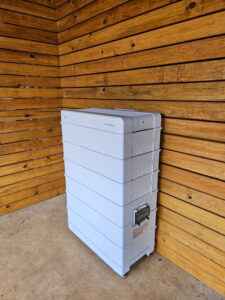
Why Your Solar Battery Might Stop Charging
If you’re wondering how to fix solar battery not charging, the short answer is this: start by checking your solar charge controller, inverter settings, and physical connections before assuming the battery itself has failed. Most charging faults in Geelong homes come down to a handful of common, diagnosable causes.
Solar battery systems are a significant investment, and when they stop working as expected, it can be frustrating — especially during Geelong’s overcast winter months when every kilowatt-hour counts. The good news is that many issues are straightforward to identify, and some can be resolved without calling anyone out.
Common Reasons a Solar Battery Stops Charging
Before you panic, it helps to understand what typically causes a solar battery to stop accepting a charge. These systems involve multiple components working together, and a fault in any one of them can interrupt the charging cycle.
- Faulty or misconfigured solar charge controller: The charge controller regulates the flow of energy from your panels to the battery. If it’s set to the wrong battery chemistry (e.g., AGM vs. lithium) or has developed a fault, charging will fail.
- Inverter or inverter-charger issues: A tripped inverter or incorrect grid-feed settings can prevent the battery from receiving charge from both solar panels and the grid.
- Loose or corroded wiring connections: Geelong’s coastal air and temperature swings can accelerate corrosion on terminals, leading to poor conductivity and interrupted charging.
- Battery management system (BMS) fault: Modern lithium batteries include a BMS that protects cells from overcharge, over-discharge, and overheating. If the BMS trips, it will cut off charging entirely.
- Deep discharge or cell imbalance: A battery that has been allowed to drain too low may require a recovery charge or may have suffered permanent capacity loss.
- Shading or panel soiling: Dirty panels or unexpected shading from new structures or tree growth can reduce solar generation to the point where the battery never reaches its charge threshold.
- Software or firmware issues: Some modern battery systems, like the Tesla Powerwall or Sungrow SBR series, rely on firmware that occasionally requires updates to function correctly.
How to Fix Solar Battery Not Charging: Step-by-Step
Working through a logical sequence of checks is the safest and most efficient approach. Always prioritise your safety — avoid opening sealed battery enclosures or touching high-voltage DC wiring unless you are a licensed electrician.
- Check your monitoring app or display: Most modern systems have a companion app or wall-mounted display. Look for error codes, low state-of-charge (SoC) warnings, or fault indicators. Note down any codes before proceeding.
- Inspect your switchboard and isolators: Head to your switchboard and confirm the solar isolator and battery circuit breakers are in the ON position. A tripped breaker is one of the most common — and easiest — fixes. If you notice repeated tripping, that signals a deeper electrical issue. You can learn more about electrical repairs and switchboard faults that may be contributing to the problem.
- Restart the system: Many inverter and battery combinations can be safely restarted by following the manufacturer’s shutdown and restart procedure. This often clears temporary BMS faults or software glitches.
- Inspect visible wiring and terminals: With the system safely isolated, visually check accessible cable connections for signs of corrosion, burning, or looseness. Do not attempt to re-terminate high-voltage DC cables yourself.
- Check your solar panels: Walk outside and look at your panels. Are they shaded by a new pergola, overgrown trees, or debris? Even partial shading on one panel in a string can significantly reduce output. Give panels a gentle clean with water if they’re visibly dirty.
- Review charge controller settings: If you have access to your charge controller’s interface, confirm the battery type, voltage thresholds, and charge profile match your specific battery’s specifications from the manufacturer’s datasheet.
- Check for firmware updates: Log into your system’s management portal and see if a firmware update is available. Apply it according to the manufacturer’s instructions.
Geelong-Specific Factors That Affect Solar Battery Performance
Living in Geelong means your solar battery system faces some unique environmental pressures. The city’s proximity to Port Phillip Bay and Bass Strait brings salt-laden air that accelerates corrosion on outdoor electrical components faster than inland locations.
Geelong also experiences significant seasonal variation — from long, sunny summer days that can push batteries to their upper thermal limits, to short, heavily overcast winter days where solar generation barely covers household loads. If your battery seems to stop charging mainly in winter, reduced panel output rather than a battery fault is often the real culprit.
Homeowners in areas like Lara, the Bellarine Peninsula, and surrounds should also be aware that rural properties may experience slightly different grid voltage profiles, which can affect how hybrid inverters manage battery charging. If you’re in one of these areas, local expertise matters — a local electrician in Lara or across the Bellarine Peninsula will understand these regional nuances.
When to Call a Professional
Some solar battery faults go beyond what a homeowner can safely or legally address. Under AS/NZS 5139 (the Australian standard governing the installation of battery energy storage systems), all electrical work on your solar battery system must be carried out by a licensed electrician with the appropriate endorsements.
You should contact a qualified professional immediately if you notice any of the following: a burning smell or visible scorch marks near the battery or inverter, persistent error codes that don’t clear after a restart, the system tripping the same breaker repeatedly, or any signs of physical damage to the battery enclosure.
SmartPower Electrical is Geelong’s trusted local team for diagnosing and repairing solar battery systems. Whether you’re dealing with a persistent BMS fault, a failed charge controller, or wiring issues that are preventing your battery from charging, the team has the tools and licences to get your system back online safely and efficiently. Don’t let a charging fault drain the value from your solar investment — get in touch with SmartPower Electrical today for a professional assessment.
Conclusion
Knowing how to fix solar battery not charging starts with a calm, systematic approach — checking your monitoring app, inspecting your switchboard, restarting the system, and reviewing panel output before assuming the worst. Many faults are minor and fixable without professional intervention.
That said, Geelong’s coastal environment, seasonal weather patterns, and the complexity of modern battery systems mean that some issues genuinely require a licensed electrician. When in doubt, don’t risk your safety or void your warranty with DIY electrical work. Reach out to SmartPower Electrical for fast, reliable solar battery troubleshooting across Geelong and the surrounding region.
Frequently Asked Questions
Why is my solar battery showing full charge but not powering my home?
This is usually an inverter configuration issue rather than a battery fault. Your inverter may be set to prioritise grid export over battery discharge, or there could be a fault in the inverter’s communication with the battery management system. Check your inverter settings or contact a licensed electrician to review the system configuration.
Can a solar battery be damaged by not charging for a long period?
Yes. Lithium iron phosphate (LiFePO4) and other lithium-based batteries can suffer cell damage if left in a deeply discharged state for an extended time. Lead-acid batteries are even more susceptible to permanent sulphation damage from prolonged low charge. If your battery has been sitting uncharged for weeks, have it assessed by a professional before attempting to charge it at full rate.
Does Geelong’s weather affect how quickly my solar battery charges?
Absolutely. Geelong averages significantly fewer peak sun hours in winter compared to summer, which directly reduces the energy available to charge your battery. Overcast days, fog off the bay, and shorter daylight hours from May through August can all result in your battery only reaching a partial state of charge each day. This is normal seasonal behaviour, not necessarily a fault.
How often should a solar battery system be professionally inspected?
Australian industry guidelines recommend a professional inspection of your battery energy storage system (BESS) at least every two years, or after any significant weather event such as a lightning strike or flooding. Regular inspections help catch corrosion, connection degradation, and BMS drift before they cause a complete charging failure. For more about what we do, visit our homepage.