
Why Backup Power During Outages Matters for Geelong Homes
Backup power during outages is no longer a luxury for Geelong homeowners — it’s a practical necessity. When a storm rolls in off Port Phillip Bay or a summer heatwave pushes the grid to its limits, your power can cut out without warning, leaving your family in the dark. The good news is that in 2026, there are more reliable, affordable solutions than ever before.
Geelong’s climate brings everything from fierce southerly winds to scorching January days, and both extremes put pressure on the local electricity network. Understanding your options means you’ll never be caught unprepared again.
Common Causes of Power Outages in Geelong
Before choosing a solution, it helps to understand why outages happen in the first place. Geelong and the surrounding region experience power disruptions for several reasons:
- Severe weather events — storms, high winds, and lightning strikes that damage powerlines and substations
- Grid overload — peak demand on hot summer days when air conditioners run flat out across the region
- Planned maintenance — scheduled network works by AusNet or Powercor that temporarily cut supply
- Bushfire risk management — network operators proactively de-energising lines during extreme fire danger days
- Localised faults — transformer failures or vehicle accidents that take out sections of the local network
If you live further out — say, on the Bellarine Peninsula or near Little River — you may find outages last longer simply because your property is further from major infrastructure. Rural and semi-rural Geelong households are often the last to be restored after a fault.
Your Main Options for Backup Power During Outages
There are several proven ways to keep the lights on when the grid lets you down. Each has its own trade-offs in terms of cost, convenience, and environmental impact.
1. Solar Battery Storage Systems
A solar battery system is one of the most popular and cost-effective solutions for Geelong homeowners in 2026. When your solar panels generate more electricity than you use during the day, the excess is stored in a battery rather than exported to the grid. When the grid goes down, a battery system with blackout protection automatically switches to battery power — often within milliseconds, so you don’t even notice the transition.
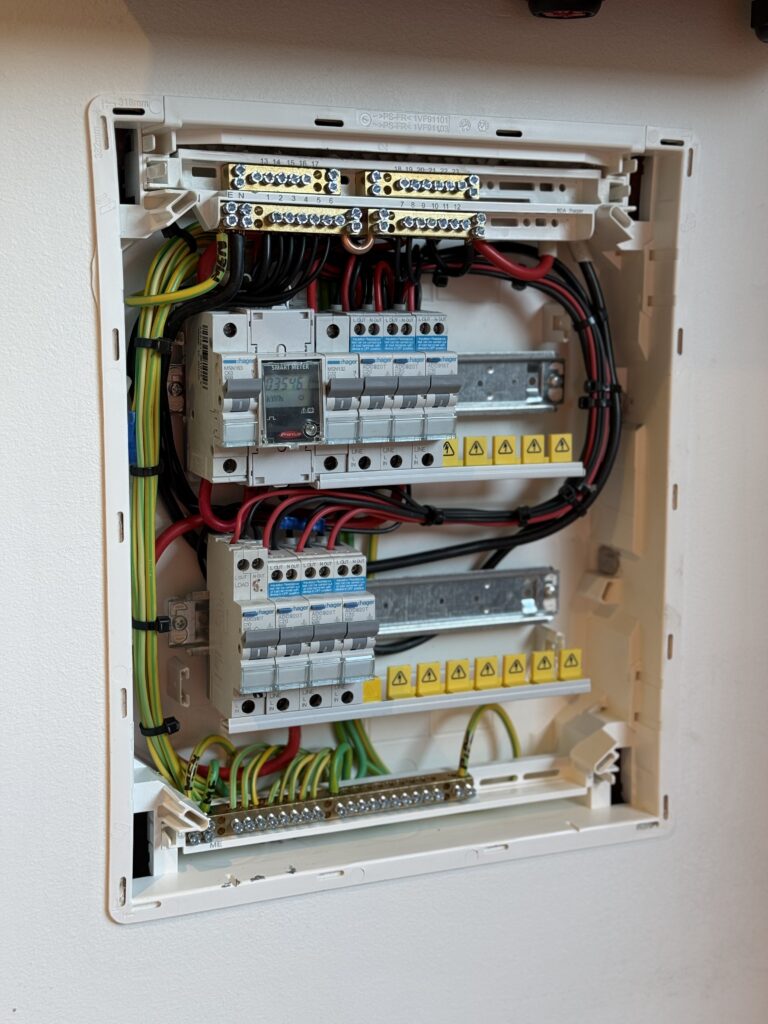
Victoria’s Solar Homes Program has offered rebates on battery storage, making this option significantly more accessible. Pairing solar panels with a quality battery like the Tesla Powerwall or sonnen battery can power your essential circuits — fridge, lighting, phone charging, and even your router — for hours or even overnight. If you’re considering this route, it’s worth understanding whether your switchboard is compatible before installation, as older boards may need upgrading first.
2. Portable Generators
A petrol or LPG generator is a straightforward backup option that many Geelong households already own. They’re relatively inexpensive upfront and can power multiple appliances simultaneously. However, generators must always be operated outdoors due to carbon monoxide risk, require fuel storage, and can be noisy — which isn’t always ideal in suburban areas.
Never connect a portable generator directly to your home’s wiring without a proper transfer switch or interlock kit installed by a licensed electrician. Doing so creates a serious risk of electrocution for line workers repairing the grid — and it’s illegal under Australian electrical safety regulations.
3. Standby (Whole-Home) Generators
For homeowners who want seamless, automatic backup power during outages, a standby generator is worth considering. These units run on natural gas or LPG, start automatically when the grid fails, and can power your entire home. Installation costs are higher, but for households with medical equipment, a home office, or hobby farms, the reliability is unmatched.
4. Uninterruptible Power Supplies (UPS)
A UPS is a battery-backed device that provides short-term power to specific equipment — typically computers, modems, or medical devices. It’s not a whole-home solution, but it’s a practical and affordable way to protect sensitive electronics and keep your internet running during brief outages.
What to Power First During an Outage
Not everything in your home needs to run during a blackout. Prioritising your loads helps your backup system last longer. Focus on:
- Refrigerator and freezer — to protect food safety
- Lighting — LED lights use minimal power
- Medical equipment — CPAP machines, oxygen concentrators, or insulin storage
- Communications — phone chargers and your modem/router
- A single heating or cooling circuit if weather conditions are extreme
Households in areas like Lara or Lovely Banks, where properties can be larger and further from town, may want to also consider powering a water pump if they rely on tank water. If you’re in one of these areas, local electricians familiar with Lara properties can advise on the right load management setup for your home.
When to Call a Professional
Some backup power tasks are straightforward DIY jobs — buying a UPS, stocking up on torches, or setting up a portable generator outdoors. But anything involving your home’s fixed wiring, switchboard, or a permanently installed system must be carried out by a licensed electrician. This is a legal requirement under the Electricity Safety Act 1998 (Vic) and exists to protect both you and the workers who maintain the grid.
If you’re ready to install a solar battery system, a standby generator, or simply want your switchboard assessed for backup power compatibility, the team at SmartPower Electrical is here to help. Serving Geelong and surrounding suburbs including the Bellarine Peninsula, SmartPower Electrical provides honest, expert advice tailored to your home and budget. Contact us today to book a consultation and take the first step toward genuine energy independence in 2026.
Conclusion
Backup power during outages is something every Geelong homeowner should plan for — not just in storm season, but year-round. Whether you choose a solar battery system, a generator, or a combination of both, the right solution depends on your household’s needs, your budget, and how long outages typically last in your area.
The key takeaways are simple: understand what’s causing outages in your area, prioritise your essential loads, never connect backup power to your fixed wiring without a licensed electrician, and explore the rebates available to you as a Victorian homeowner. If you’re ready to get started, reach out to SmartPower Electrical for a no-obligation assessment — because staying powered when the grid goes down is entirely within reach.
Frequently Asked Questions
Can I use a solar battery system as backup power during outages in Geelong?
Yes, but only if your battery system includes blackout protection or islanding capability. Not all solar inverters and batteries support this feature automatically, so it’s important to confirm with your installer that your system is configured for backup operation. A licensed electrician can assess your current setup and advise on any upgrades needed.
Are there Victorian government rebates available for home battery storage in 2026?
Victoria’s Solar Homes Program has provided rebates for solar panels and battery storage for eligible households. Rebate availability and eligibility criteria can change, so it’s best to check the current offerings directly with Solar Victoria or speak with a registered installer who can confirm what you qualify for at the time of purchase.
How long can a home battery system power my house during an outage?
This depends on the battery’s storage capacity and how much power your household consumes. A typical 10–13 kWh battery can power essential circuits — fridge, lights, phone chargers, and modem — for 12 to 24 hours. Running high-draw appliances like electric ovens or ducted air conditioning will significantly reduce this duration.
Is it legal to connect a generator to my home’s wiring myself in Victoria?
No. Under Victorian electrical safety legislation, any connection to your home’s fixed wiring must be carried out by a licensed electrician. Connecting a generator without a proper transfer switch or interlock is not only illegal — it creates a serious electrocution risk for network workers repairing the grid during an outage. Always engage a qualified professional for this work. For more about what we do, visit our homepage.