
What Does Home Battery Storage Installation Actually Involve?
Home battery storage installation is the process of connecting a battery system to your solar panels and home switchboard so you can store excess solar energy and use it after dark or during grid outages. In Geelong, a standard installation typically takes one to two days and must be completed by a licensed electrician accredited under the Clean Energy Council (CEC). Understanding each step helps you know exactly what to expect before the crew arrives.
Why Geelong Homeowners Are Making the Switch in 2026
Energy prices across Victoria continue to climb, and Geelong households are feeling it. With the state’s Solar Homes Programme still offering rebates for eligible battery installations, there has never been a more practical time to act. A well-sized battery system lets you draw on stored solar power during the evening peak — the period when grid electricity is at its most expensive.
Geelong’s climate also works in your favour. The region receives strong solar irradiance across spring and summer, meaning your panels generate more than enough surplus energy to fill a battery on most days. Even through the cooler months, a properly sized system keeps your household running on clean, affordable power for a significant portion of the day.
The Step-by-Step Home Battery Storage Installation Process
Knowing what happens on installation day removes the guesswork and helps you prepare your property. Here is what a professional installation looks like from start to finish:
- Site assessment: A CEC-accredited electrician inspects your existing solar system, switchboard, and proposed battery location. They check that your switchboard is compatible and safe to connect a battery system to.
- System design and approval: The installer designs the battery configuration to match your household’s consumption patterns and lodges any required network connection applications with your Distribution Network Service Provider (DNSP).
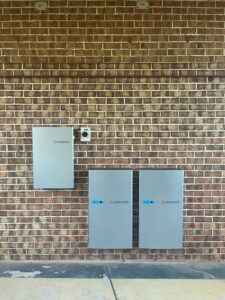
- Battery mounting: The battery unit — commonly a lithium iron phosphate (LFP) chemistry system — is wall-mounted or floor-mounted in a weatherproof location, typically a garage, laundry, or external wall.
- Electrical wiring: DC and AC cabling is run between the battery, inverter, and switchboard. All wiring must comply with AS/NZS 3000 (the Australian Wiring Rules) and the battery manufacturer’s specifications.
- Switchboard integration: A dedicated battery circuit and appropriate protection devices are installed in your switchboard to safely manage charge and discharge cycles.
- Commissioning and testing: The system is powered up, tested for correct operation, and all safety checks are completed. The installer registers the system with the relevant network authority.
- Monitoring setup: Most modern battery systems include an app or web portal so you can track energy flows, battery state of charge, and savings in real time.
Choosing the Right Battery Size for Your Home
Battery capacity is measured in kilowatt-hours (kWh). The right size depends on your average daily energy consumption, the size of your solar array, and whether you want backup power during outages. A typical Geelong household uses between 15 and 25 kWh per day, but most of that is consumed at night when the sun is not shining.
A 10–13 kWh battery is a popular choice for mid-sized homes because it covers a substantial portion of overnight demand without being oversized for the solar array. Your installer should model your consumption data before recommending a capacity — avoid anyone who quotes a battery size without reviewing your actual usage history.
Understanding Victorian Battery Rebates and Incentives
The Victorian Government’s Solar Homes Programme provides rebates for eligible battery storage systems installed alongside solar panels. To qualify, your household must meet income and property value thresholds, and the battery must be installed by a CEC-accredited installer using an approved product. You can check current eligibility criteria and rebate amounts on the Solar Victoria website.
In addition to the state rebate, households may benefit from Virtual Power Plant (VPP) programmes, where your battery is aggregated with others to provide grid services in exchange for bill credits or payments. Several energy retailers operating in the Geelong area offer VPP enrolment at the time of installation.
What You Can Prepare Before Installation Day
There are a few practical things you can do yourself to make the installation run smoothly. Clear the area around your proposed battery location so the electricians have easy access. Ensure your switchboard area is accessible and not blocked by stored items. If you have a smart meter, confirm it is functioning correctly with your energy retailer beforehand.
Homeowners across the Bellarine Peninsula and surrounding suburbs often ask whether they need to be home for the full installation. The honest answer is yes — someone should be on-site for at least the start and end of the job to authorise access and sign off on the completed work.
When to Call a Professional
Home battery storage installation is not a DIY project. Victorian law requires all electrical connection work to be performed by a licensed electrician, and battery systems must be installed by a CEC-accredited battery installer. Attempting to connect a battery yourself is illegal, dangerous, and will void your product warranty.
If you are ready to move forward — or simply want an honest assessment of whether your home is suitable — the team at SmartPower Electrical can walk you through your options without any pressure. SmartPower Electrical services Geelong and the surrounding region, including Lara, Lara, Newtown, and beyond. Call or enquire online to book a no-obligation site assessment today.
Conclusion
Home battery storage installation in Geelong follows a clear, structured process — from site assessment and system design through to commissioning and monitoring setup. Getting it right means choosing a CEC-accredited installer, sizing your battery to your actual consumption, and taking advantage of available Victorian rebates before they change.
The financial case is strong in 2026, and the technology is more reliable than ever. If you are serious about energy independence and lower power bills, reach out to SmartPower Electrical for expert advice tailored to your home and suburb.
Frequently Asked Questions
How long does home battery storage installation take in Geelong?
Most residential battery installations are completed within one to two days. The timeframe depends on the complexity of your switchboard, the battery location, and whether any additional cabling is required. Your installer will give you a more precise estimate after the initial site assessment.
Do I need solar panels already installed to add a battery?
In most cases, yes — a solar array is required to charge a home battery system effectively. However, some battery systems can also charge from the grid during off-peak tariff periods. Your installer can advise on the best approach based on your current setup and energy goals.
Is home battery storage installation eligible for a Victorian government rebate?
Eligible Victorian households can access a battery rebate through the Solar Homes Programme. Conditions apply, including property value caps, income thresholds, and the requirement to use an approved installer and product. Check the Solar Victoria website for the most current eligibility criteria and rebate amounts.
Where is the best place to mount a home battery in a Geelong property?
Most batteries are installed in a garage, laundry, or on a sheltered external wall. The location must be protected from direct weather exposure, away from heat sources, and accessible for maintenance. Your installer will assess your property and recommend the safest and most practical position during the site visit.